Moving is one of those projects that seems manageable until it suddenly isn't. The trick is to start earlier than you think, break it into weekly chunks, and keep everything (quotes, receipts, inventory, important dates) in one place.
This timeline assumes about eight weeks of lead time. If you have less, start at whichever week matches your situation and do the earlier weeks' tasks in a hurry. If you have more, great: spread the decluttering out.
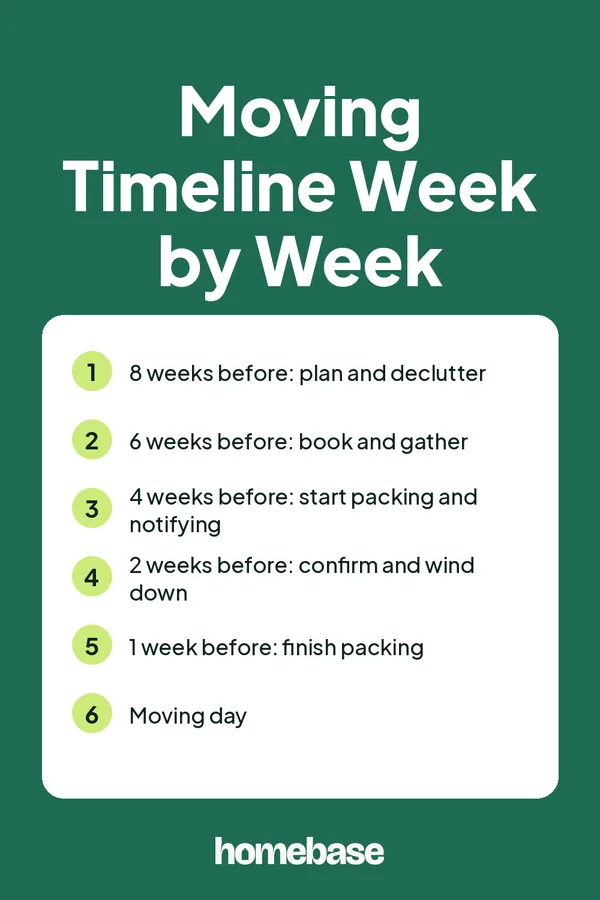
8 weeks before: plan and declutter
- Set a moving budget. Include movers or truck rental, packing supplies, deposits, travel, overlapping rent or mortgage, cleaning, and takeout during the chaotic days.
- Start a moving folder or binder for quotes, contracts, receipts and your to-do list. Our Moving Planner includes a timeline, budget page, room-by-room packing log and address change tracker.
- Declutter room by room. Every item you get rid of is one less thing to pack, move and unpack. Sort into keep, donate, sell and trash.
- Request moving quotes. If you're hiring movers, get several written estimates. For interstate moves, the Federal Motor Carrier Safety Administration's Protect Your Move site explains your rights and how to check a mover's registration.
- Research your new area: schools, doctors, utilities and local rules for things like trash pickup and parking.
6 weeks before: book and gather
- Book your movers or truck. Popular dates, like weekends and the end of the month, fill up fast.
- Order supplies: boxes in a few sizes, packing tape, markers, packing paper and a tape gun. A heavy-duty packing tape gun with refills saves a lot of frustration.
- Collect records: school records, medical and vet records, prescriptions. Ask for copies or arrange transfers.
- Take inventory of valuable items. Photos and serial numbers help if anything is damaged or lost in transit. Our Home Inventory makes this quick.
- Check insurance. Ask your homeowner's or renter's insurer how coverage works during the move and at the new address.
4 weeks before: start packing and notifying
- Pack rarely used items first: seasonal decorations, off-season clothes, guest room items, books.
- Label every box with the destination room and a short contents list. Color-coding by room helps movers put boxes in the right place.
- Change your address with USPS. You can file a change of address online (there's a small identity verification fee) or in person at a post office.
- Schedule utilities. Arrange disconnection at your old home the day after you move out, and connection at your new home the day before you arrive. Include electricity, gas, water, trash, internet.
- Start your address change list (see the full list below).
2 weeks before: confirm and wind down
- Confirm your mover in writing: date, arrival window, address, inventory, and price.
- Use up food in the freezer and pantry. Plan simple meals.
- Return borrowed items and pick up dry cleaning or repairs.
- Arrange pet and child care for moving day if possible.
- Refill prescriptions so you don't run out during the transition.
- Back up computers and phones.
1 week before: finish packing
- Pack everything except the essentials you'll use in the last few days.
- Pack an "open first" box for each person (see below).
- Defrost the freezer if you're moving it.
- Disassemble furniture and put screws and small hardware in labeled zip bags taped to the furniture.
- Confirm parking or elevator reservations at both addresses, if needed.
Moving day
- Be there when the movers arrive and do a walk-through with the crew lead.
- Keep your essentials, valuables, important documents and medications with you, not on the truck.
- Check the mover's inventory before you sign anything, and note any damage.
- Do a final walk-through of the old home: check closets, cabinets, the attic, garage and outdoor areas.
- Take photos of the empty home's condition, especially if you're renting and want your deposit back.
The "open first" box
Pack one clearly labeled box or bag per person with:
- Phone chargers
- Toilet paper, hand soap, a towel
- Medications
- Change of clothes and pajamas
- Basic toiletries
- Snacks and water
- Bedding for the first night
- A few kitchen basics: paper plates, cups, a knife, a pan, coffee or tea
- Box cutter, scissors, basic tools, a flashlight
- Kids' comfort items and pet food and bowls
Future you will be very grateful.
Who to notify when you move
This is the list people forget most. Work through it during weeks four through two, and finish anything left over in your first week at the new place.
Government
- USPS (mail forwarding)
- IRS: you can use Form 8822 or other methods to update your address
- State driver's license and vehicle registration
- Voter registration
- Social Security and other federal benefits, if applicable. USA.gov's moving page links to the agencies to update.
Money
- Banks and credit unions
- Credit cards
- Loan servicers (student, auto, mortgage)
- Investment and retirement accounts
- Employer and payroll
Insurance
- Auto, home or renters, health, life
Household and services
- Utilities and internet (old and new)
- Subscriptions and deliveries
- Online shopping accounts (update your default shipping address)
- Doctors, dentist, pharmacy, vet
- Schools and childcare
People
- Family and friends
- Your HOA or landlord (old and new)
After you move: the first two weeks
- Unpack by priority: beds, bathroom, kitchen, then everything else.
- Check safety basics: test smoke and carbon monoxide alarms, locate the main water shutoff and electrical panel, and consider changing locks if you bought the home.
- Register to vote and update your driver's license within the timeframe your state requires.
- Update your household binder with the new address, utility account numbers and local contacts. Our household binder guide shows what to include.
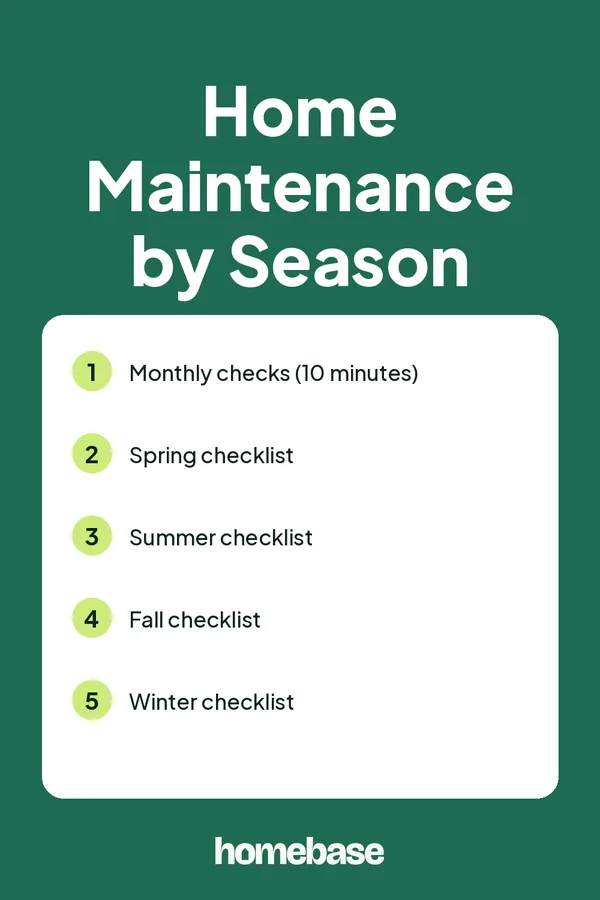
- Start a maintenance log for your new home. See our seasonal home maintenance checklist.
Moving on a budget
- Move mid-month or midweek, when demand may be lower.
- Get free boxes from friends, local groups or stores.
- Pack yourself, and hire movers only for the heavy lifting.
- Sell items you don't want to move.
- Keep receipts. Moving costs are not deductible for most people, but there are exceptions (for example, for certain members of the military). Check the IRS rules or ask a tax professional.
Frequently asked questions
How early should I start planning a move? Eight weeks is comfortable for most households. If you're moving a large home, moving long distance, or moving during a busy season like summer, starting even earlier gives you more choice of dates and movers.
How many boxes will I need? It depends on how much you own and how much you declutter first. A practical approach is to order a starter set, pack a couple of rooms, and then order more based on how quickly you're going through them. Small boxes are best for heavy items like books, so nobody strains lifting them.
Should I hire movers or do it myself? Compare the full cost of each, including truck rental, fuel, equipment, your time and any help you'll need to recruit. Many people choose a middle path: they pack themselves and hire movers only for loading, driving and unloading.
What should I never put on the moving truck? Keep important documents, medications, valuables like jewelry, chargers and your "open first" essentials with you. If something would be a disaster to lose, it travels in your car.
How do I keep track of everything? Use one planner or binder for the whole move: quotes, the timeline, the box inventory and the address change list. When everything is in one place, nothing depends on remembering.
Quick-start checklist
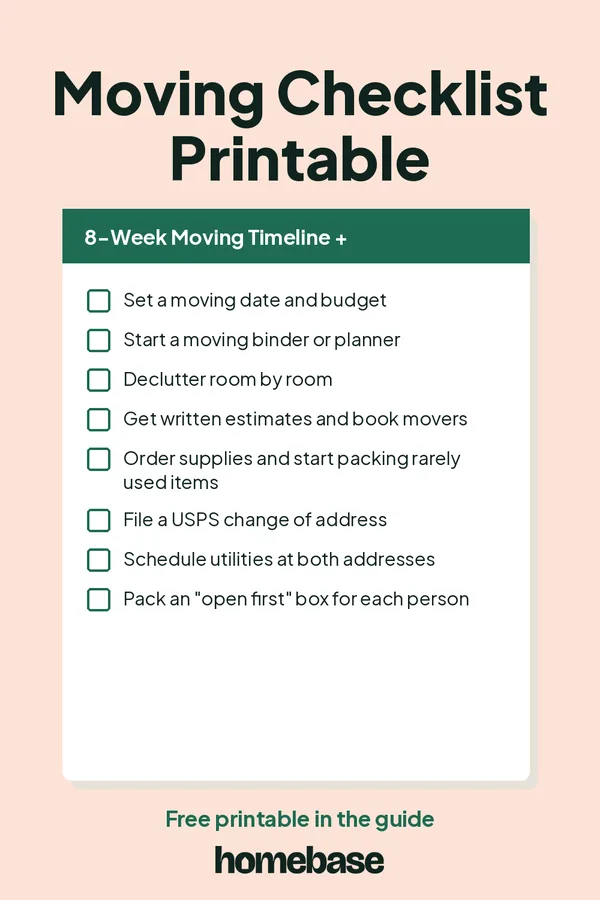
- Set a moving date and budget
- Start a moving binder or planner
- Declutter room by room
- Get written estimates and book movers
- Order supplies and start packing rarely used items
- File a USPS change of address
- Schedule utilities at both addresses
- Pack an "open first" box for each person
- Work through the address change list
- Unpack by priority and test alarms in the new home
From our shop
Tools from our shop that go with this guide
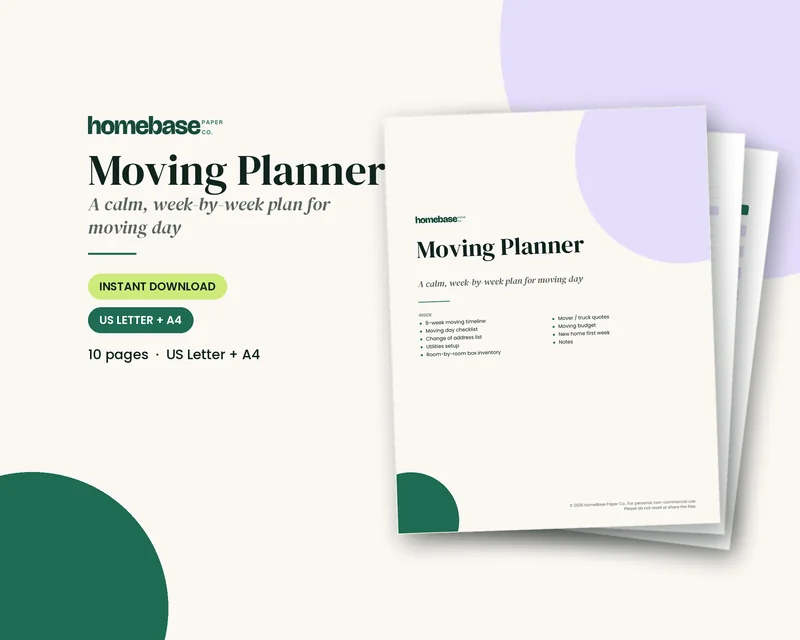
Printable PDF
Moving Planner
Everything from 8 weeks out to your first week in the new place.
View on Etsy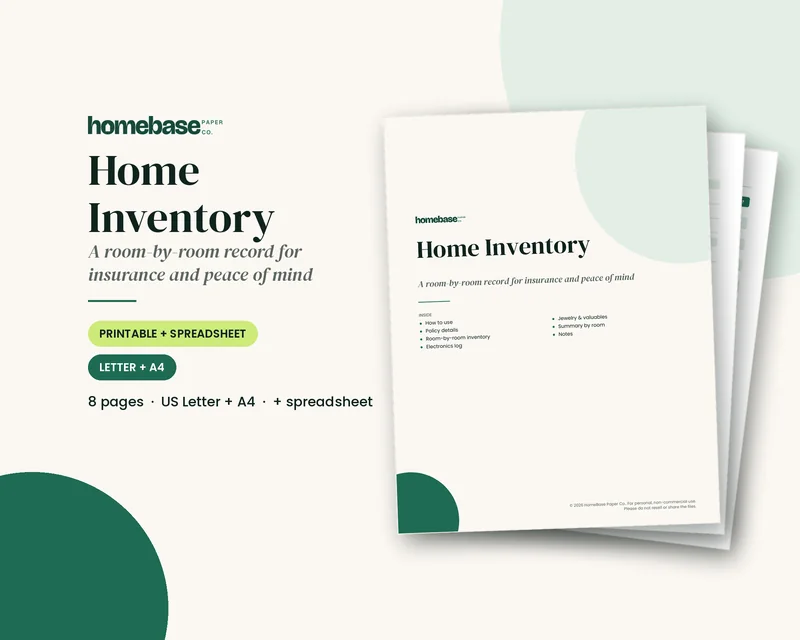
Printable PDF + spreadsheet
Home Inventory
Printable pages and a spreadsheet that totals the value of every room.
View on Etsy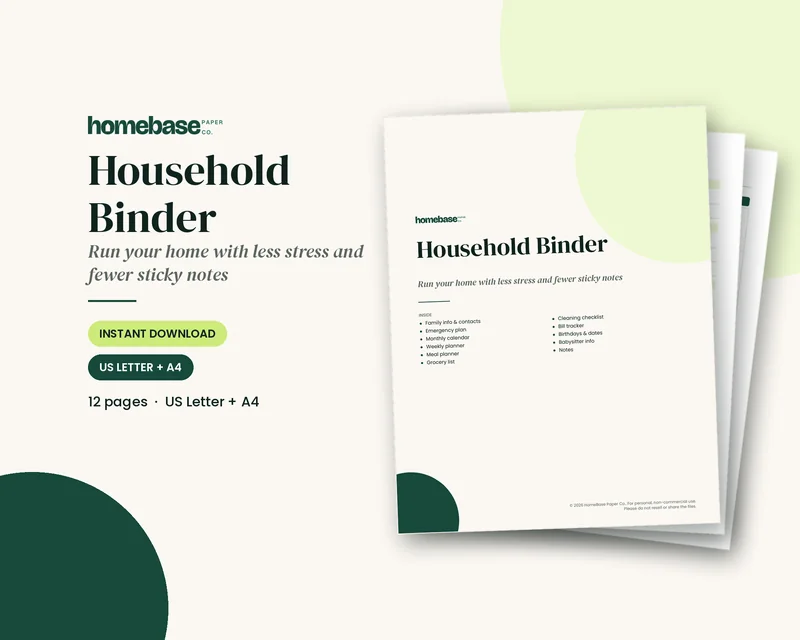
Printable PDF
Household Binder
Family info, emergency plan, calendars, meals, groceries, cleaning, bills and sitter notes.
View on EtsySave this guide for later