Nobody likes to think about it, but if you were suddenly in the hospital, or worse, would your family know where to find your insurance policies, how to pay the mortgage, or who your doctors are? For many households, the honest answer is no. One person handles the bills and the accounts, and the information lives in their head.
An "if something happens to me" binder (also called an emergency binder, a legacy binder or an "in case of emergency" file) fixes that. It's a single, secure place that tells your loved ones what they need to know and where to find it.
This guide is a practical checklist. It isn't legal advice; for wills, trusts and powers of attorney, talk to an attorney in your state.
Why it matters
When someone is suddenly unable to manage their affairs, the people helping them often face two problems at once: grief or worry, and a scavenger hunt. Bills keep coming. Accounts need to be located. Decisions have to be made, sometimes quickly.
The National Institute on Aging's guide to getting your affairs in order recommends gathering key personal, financial and legal information in one place and making sure a trusted person knows where it is. Ready.gov's financial preparedness page makes a similar point for disasters, and links to the Emergency Financial First Aid Kit, a free set of forms for recording key information.
A binder doesn't have to be perfect to help. Even a partly filled binder is far better than nothing.
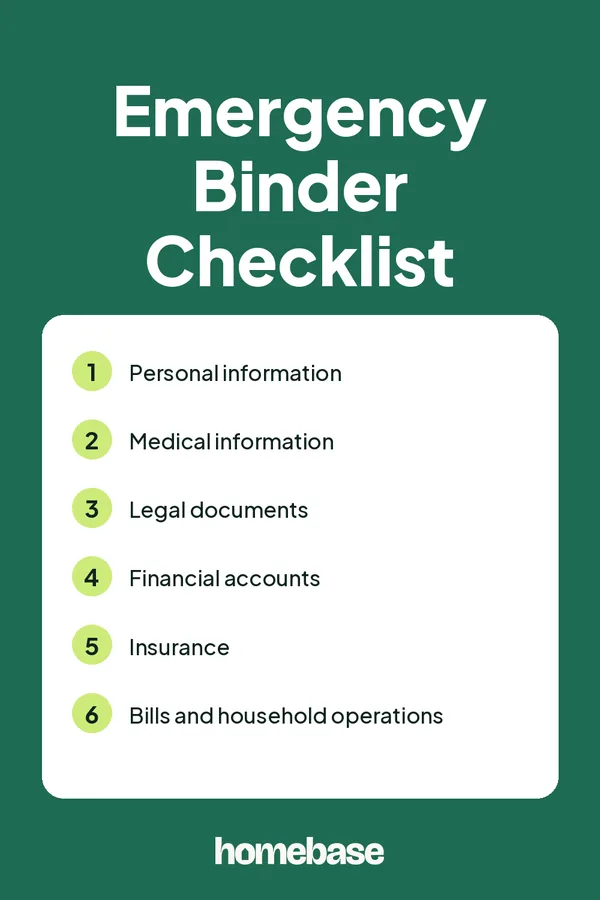
Section 1: Personal information
- Full legal name, date of birth, and place of birth
- Where to find your birth certificate, marriage or divorce documents, passports, and military discharge papers (if applicable)
- Where to find your Social Security card (note the location rather than writing out the full number in the binder)
- Names and contact information for close family, friends, and your employer
Section 2: Medical information
- Doctors and specialists, with phone numbers
- Medications, dosages and pharmacy
- Allergies and medical conditions
- Health insurance cards (copies) and policy numbers
- Advance directives: the NIA explains living wills and health care powers of attorney. Note where the signed originals are kept.
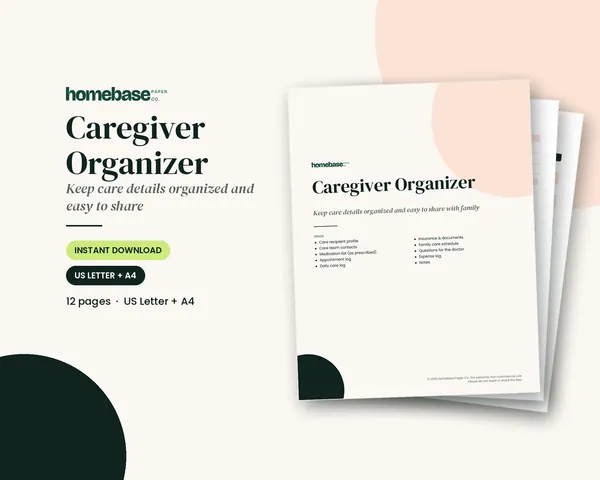
If you're caring for an aging parent, our Caregiver Organizer covers appointments, medications and care contacts in more detail.
Section 3: Legal documents
Note where each of these is kept, and who has copies:
- Will and any trusts
- Durable power of attorney for finances
- Health care power of attorney and living will
- Guardianship wishes for minor children
- Deeds and titles (home, vehicles)
- Prenuptial or postnuptial agreements
- Your attorney's name and contact information
Section 4: Financial accounts
For each account, list the institution, account type, last four digits, and how to contact them. Avoid writing out full account numbers unless the binder is stored very securely.
- Checking and savings accounts
- Credit cards
- Retirement accounts (401(k), IRA, pension) and their beneficiaries
- Brokerage and investment accounts
- Loans and mortgages
- Safe deposit box location and where the key is
- Financial advisor, accountant or tax preparer
- Where to find recent tax returns
Section 5: Insurance
- Life insurance: company, policy number, beneficiaries, agent
- Health, dental and vision
- Home or renters insurance
- Auto insurance
- Disability and long-term care insurance
- Employer-provided benefits (contact HR for details)
Section 6: Bills and household operations
This is the section families need most in the first few weeks:
- A list of every recurring bill, the due date, and how it's paid (autopay, online, mailed check)
- Utilities, internet and phone providers
- Subscriptions and memberships that should be paused or canceled
- Who to call for home repairs
- Where spare keys, the garage code and alarm codes are kept (stored securely)
Section 7: Digital life
- Email accounts, phone, and computer access
- Social media accounts and what you want done with them
- Online banking and bill-pay logins
- Cloud storage for photos and documents
- Password manager details, if you use one
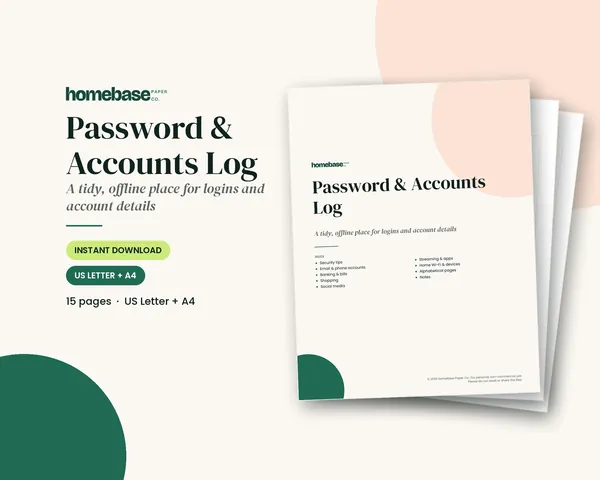
Security tip: many people keep passwords in a password manager and record only the instructions for accessing it (often with a separate emergency access feature). If you prefer paper, keep a dedicated password log in a locked, secure place, separate from the main binder. Our Password & Accounts Log is designed for this.
Section 8: Dependents and pets
- Children's schools, doctors, routines and who should care for them short-term
- Pets: vet, food, medications, routines, and who has agreed to take them
Section 9: Final wishes
This section is optional and personal, but it can be a real gift to your family:
- Funeral and burial or cremation preferences
- Any prepaid arrangements
- Religious or cultural considerations
- People to notify
- Organ donation wishes
- Letters to loved ones
Where to keep it (security matters)
Because this binder holds sensitive information, store it carefully:
- A fireproof, waterproof home safe or lockbox is a common choice. A fireproof and waterproof document safe can hold the binder and original documents.
- Tell one or two trusted people where it is and how to access it. A binder no one can find doesn't help.
- Consider a copy with your attorney or a trusted family member, especially for the "where to find it" pages.
- Be cautious with full numbers. Last four digits plus the institution's phone number is usually enough for someone to start the process.
How to start without getting overwhelmed
This is a big project, and it's emotional. Break it into small steps:
- Week 1: Fill out the personal information and contacts. Make a list of where key documents are.
- Week 2: List all bills and how they're paid.
- Week 3: List financial accounts and insurance policies.
- Week 4: Add medical information and digital accounts.
- Later: Work on legal documents with an attorney, and write final wishes when you're ready.
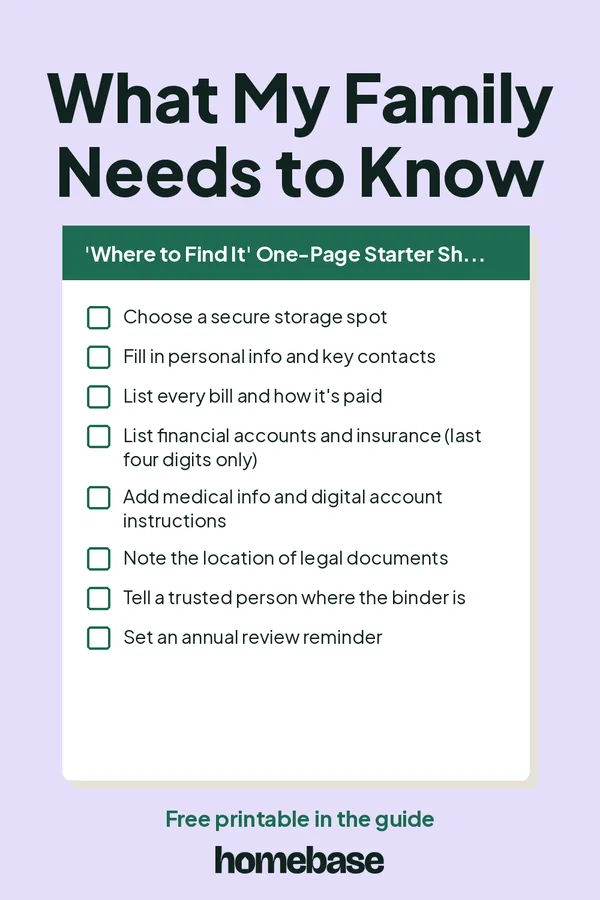
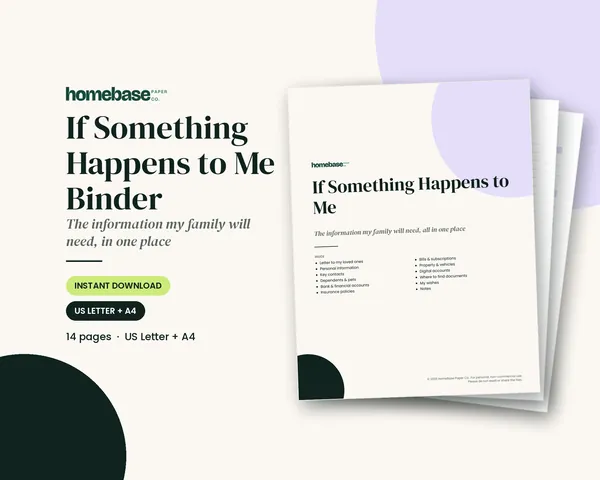
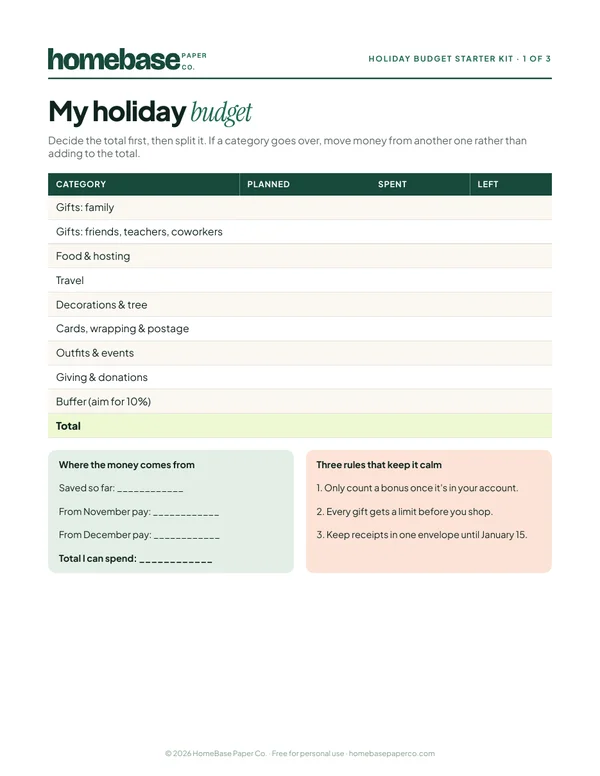
The free "Where to Find It" sheet below is designed as a 30-minute first step. If you'd like the complete set of pages, our If Something Happens to Me Binder walks through every section above, and the Family Peace of Mind Bundle adds the caregiver organizer and password log.
Keep it current
Set a reminder to review the binder once a year, and after big life events: a move, a new job, a marriage or divorce, a new baby, a new account, or a change in health. Updating takes far less time than starting from scratch.
Frequently asked questions
Is this binder a legal document? No. It's an organizer that tells people where things are and what your wishes are. Legal documents like a will or power of attorney need to be created and signed according to your state's rules, usually with an attorney's help.
Who should know about the binder? At least one trusted adult, such as a spouse, adult child, sibling or close friend. Many people also tell their executor or the person named in their power of attorney.
I'm young and healthy. Do I need one? Emergencies don't only happen to older people. If anyone depends on you, or if you're the one who handles the household finances, a basic binder is worth an afternoon.
Quick-start checklist
- Choose a secure storage spot
- Fill in personal info and key contacts
- List every bill and how it's paid
- List financial accounts and insurance (last four digits only)
- Add medical info and digital account instructions
- Note the location of legal documents
- Tell a trusted person where the binder is
- Set an annual review reminder
This article is general information and not legal, financial or medical advice. Please consult a licensed attorney about wills, trusts and estate planning.
From our shop
Tools from our shop that go with this guide
Printables
If Something Happens to Me Binder
Accounts, insurance, bills, contacts, documents and your wishes - so your family isn't left guessing.
 Save 37%
Bundles
Family Peace of Mind Bundle
The If Something Happens to Me binder, Caregiver Organizer, Pet Health Records and Password Log together.
Printables
Password & Accounts Log
Organized by category and A-Z, with room for hints instead of full passwords.
Printables
Caregiver Organizer
One place for contacts, appointments, the medication list from the doctor, and daily notes.
Free download
The Holiday Budget Starter Kit
A one-page holiday budget, a gift list with a spending limit for every person, and a 6-week countdown so December stays calm and paid for.
Free, no sign-up needed.
Save this guide for later