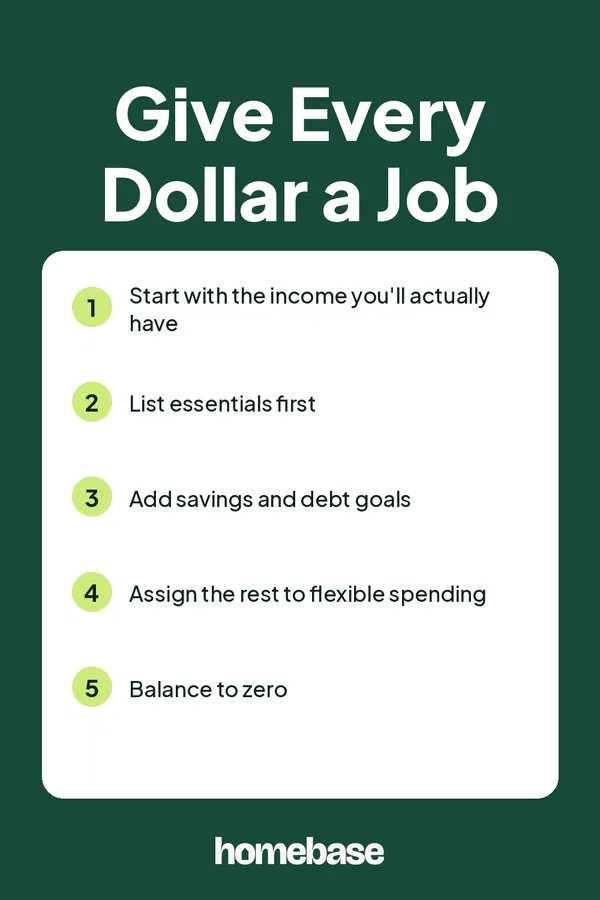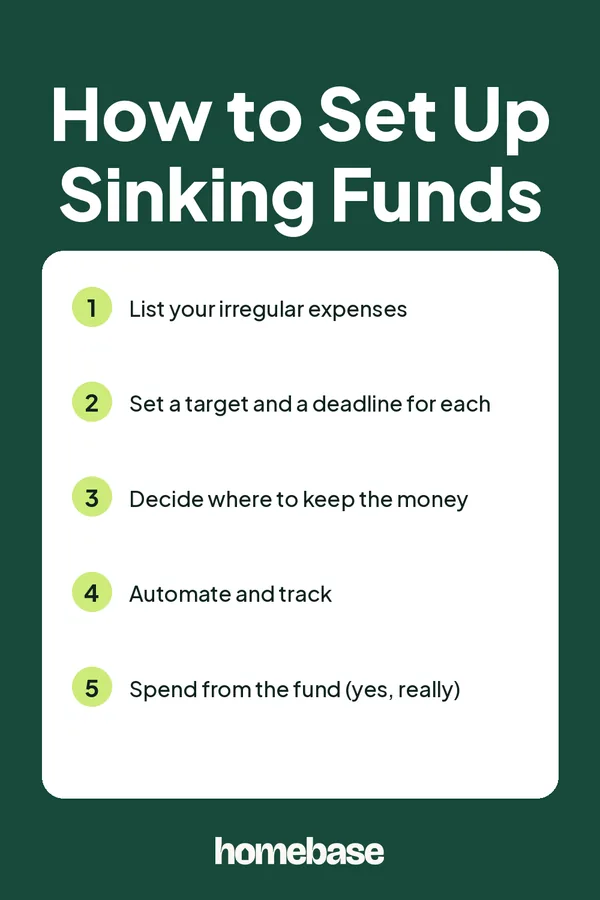
The holidays are wonderful, and for a lot of families they're also the most expensive month of the year. Gifts are only part of it. There's food for gatherings, travel, decorations, teacher and coworker gifts, wrapping paper, holiday cards, outfits for parties, and the general "it's the holidays" spending that sneaks in.
A holiday budget won't make the season less fun. It makes it more fun, because you're not quietly worrying about January's credit card bill.
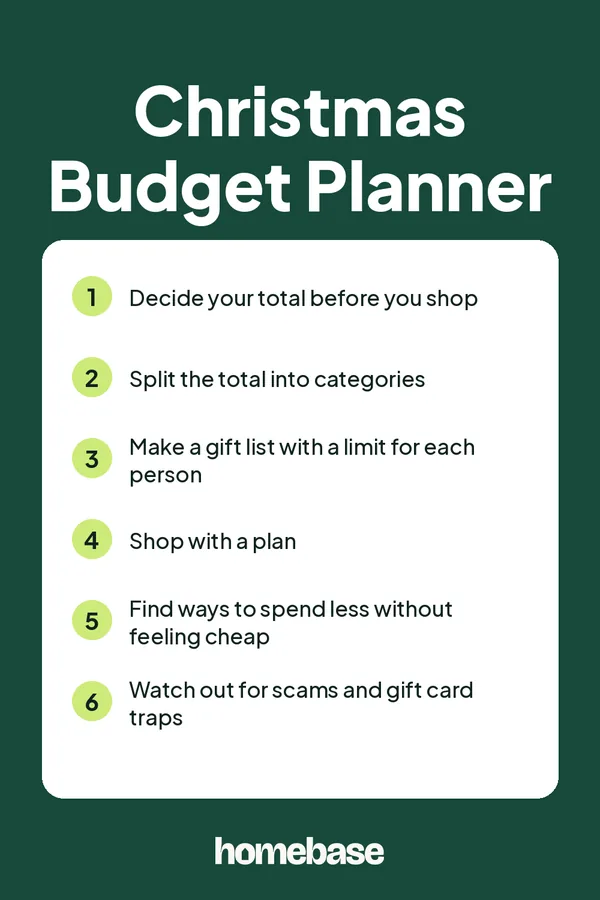
Step 1: Decide your total before you shop
The most important number is the one you decide first: how much can you spend in total without going into debt?
Look at:
- Money already saved for the holidays (if you've had a holiday sinking fund)
- What your regular budget can spare from November and December paychecks
- Any expected extra income, like a bonus. Only count it once it's actually in your account.
Add these up. That's your holiday budget. If the number feels small, that's useful information, and it's much better to know now than in January.
Step 2: Split the total into categories
Gifts are usually the biggest piece, but don't let them eat the whole budget. A typical breakdown:
| Category | What's included |
|---|---|
| Gifts | Family, friends, kids |
| Small gifts | Teachers, coaches, coworkers, neighbors, mail carrier |
| Food and hosting | Holiday meals, baking, party food, drinks |
| Travel | Gas, flights, pet boarding, hotel |
| Decorations | Tree, lights, new decorations |
| Wrapping and cards | Paper, tape, bags, cards, postage |
| Experiences | Holiday events, light displays, activities |
| Charity | Donations, toy drives |
| Buffer | The thing you forgot |
Assign an amount to each, and make sure the categories add up to your total. A buffer of 5 to 10 percent of your budget catches the inevitable surprises.
Step 3: Make a gift list with a limit for each person
Write down every person you plan to buy for, then assign each a spending limit. This step is where most holiday budgets succeed or fail.
Tips:
- Start with the total gift budget and work down, not the other way around.
- Group people if that helps: kids, immediate family, extended family, friends.
- Include the small ones. Teacher gifts, secret gift exchanges and hostess gifts add up.
- Track ideas, purchases and wrapping status in one place so you don't double-buy or forget someone.
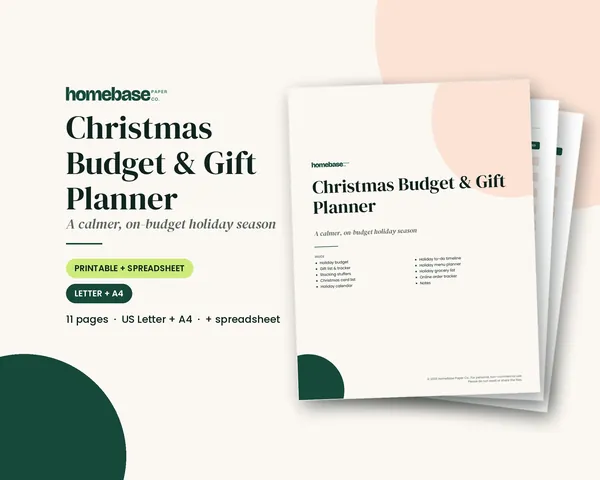
Our Christmas Budget & Gift Planner has a gift list with budget and actual columns that total automatically in the spreadsheet version, plus printable pages for the gift list, holiday meal plan and card list.
Step 4: Shop with a plan
- Shop from your list. If you see something great for someone not on the list, write it down and decide later.
- Watch for sales, but only on things you were going to buy anyway. A discount on something you didn't plan to buy is still spending.
- Track spending as you go. Update your gift list after each purchase so you always know what's left.
- Keep receipts in one envelope or folder, and take photos of gift receipts.
- Be careful with buy now, pay later. It can be convenient, but several BNPL plans at once can be hard to keep track of. The CFPB explains how BNPL loans work and what to watch for.
Step 5: Find ways to spend less without feeling cheap
- Suggest a gift exchange for extended family or friends instead of everyone buying for everyone.
- Set a family spending limit for adults, or agree to gift only the kids.
- Give experiences or time: a homemade dinner, babysitting, a day trip.
- Make something: baked goods, a photo calendar, a framed family recipe.
- Use the "four gift" idea for kids: something they want, something they need, something to wear, something to read.
- Shop your home for decorations before buying new ones, and buy next year's wrapping paper on clearance after the holidays.
- Plan the holiday meal and ask guests to bring a dish. Our meal planning on a budget guide helps here, too.
A gift wrap storage organizer makes it easy to see what wrapping supplies you already have, so you don't buy more every year.
Step 6: Watch out for scams and gift card traps
Gift cards are popular presents, and also a favorite tool of scammers. The FTC's guide to avoiding gift card scams says no real business or government agency will ever tell you to pay with a gift card, and recommends keeping a copy of the card and receipt. When buying gift cards, inspect the packaging to make sure it hasn't been tampered with.
Step 7: Review in January and plan for next year
After the holidays, take 15 minutes to compare what you planned to what you spent:
- Which categories went over?
- What did you forget to budget for?
- What spending felt worth it, and what didn't?
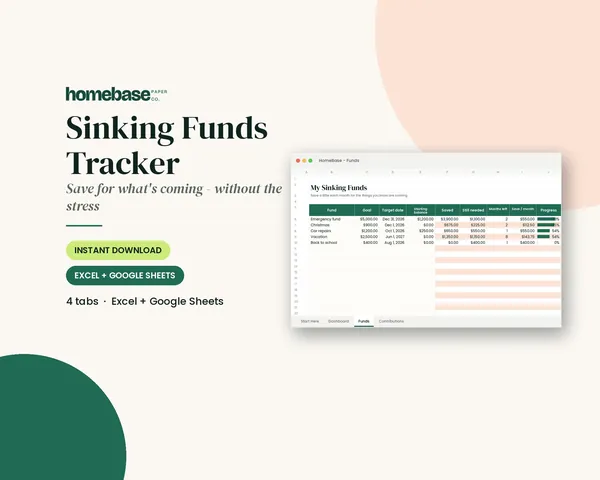
Then divide next year's holiday budget by the months remaining and start a holiday sinking fund. For example, a $1,200 holiday budget is $100 a month if you start in January. Next December, the money will be waiting. A Sinking Funds Tracker makes it easy to see the balance grow.
What if you've already overspent?
It happens. If holiday spending landed on a credit card:
- Stop adding to it.
- Put the balance into your January budget as a specific debt payment.
- Use the debt snowball or avalanche method if you have more than one balance.
- Start a holiday sinking fund right away so next year is different.
Holiday budget timeline
| When | What to do |
|---|---|
| January | Review last year, start a holiday sinking fund |
| September | Set your total and categories, start the gift list |
| October | Begin shopping from the list; plan travel |
| November | Most gift shopping; plan meals and hosting |
| December | Finish gifts, wrap, enjoy, track final spending |
Frequently asked questions
How much should I spend on Christmas? There's no universal number. The right amount is what you can pay for in cash or savings without missing bills or carrying a balance into the new year. Start with that total and work backward to gifts and other categories.
How do I tell family we're cutting back? Be honest and early. Something like "We're focusing on paying down debt this year, so we're keeping gifts simple" works well, especially if you propose an alternative like a gift exchange or a family experience. Many relatives are relieved to scale back too.
Should kids help with the holiday budget? Older kids can. Giving them a set amount to buy gifts for siblings or grandparents teaches budgeting, comparison shopping and the satisfaction of giving within a limit.
When should I start holiday shopping? Whenever it fits your cash flow. Spreading purchases over October and November can make the cost easier to absorb, as long as you track everything against your list so early shopping doesn't turn into extra shopping.
Quick-start checklist
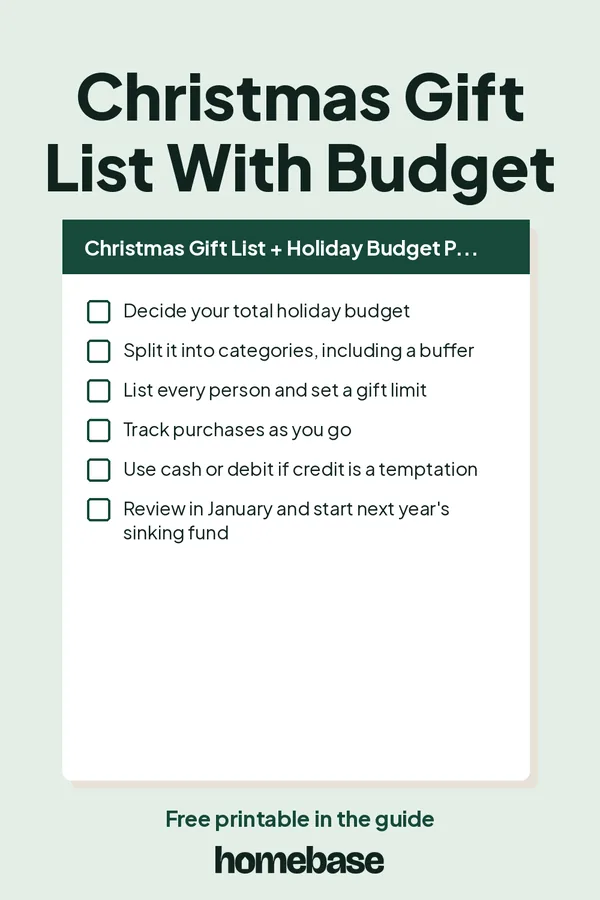
- Decide your total holiday budget
- Split it into categories, including a buffer
- List every person and set a gift limit
- Track purchases as you go
- Use cash or debit if credit is a temptation
- Review in January and start next year's sinking fund
This article is general education and not personalized financial advice.
From our shop
Tools from our shop that go with this guide
Printables
Christmas Budget & Gift Planner
Set a budget for every person, log each purchase, and watch what's left - plus printable gift, card, menu and to-do pages.
Spreadsheets
Sinking Funds Tracker
It does the math: how much to set aside each month to hit every goal on time.
 Save 57%
Bundles
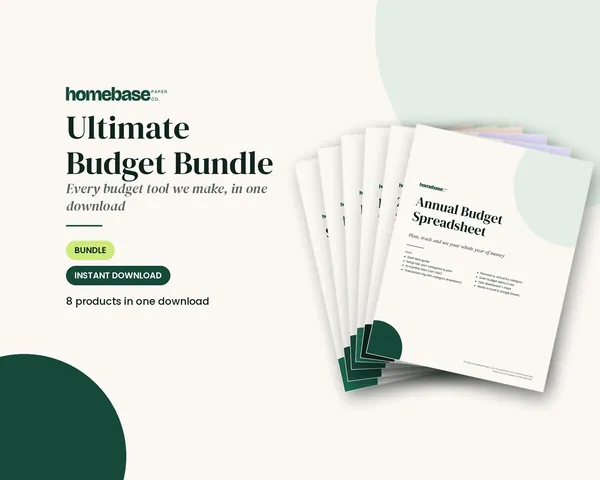
Ultimate Budget Bundle
All 6 spreadsheets + both printable planners - for less than half the price of buying them separately.
Free download
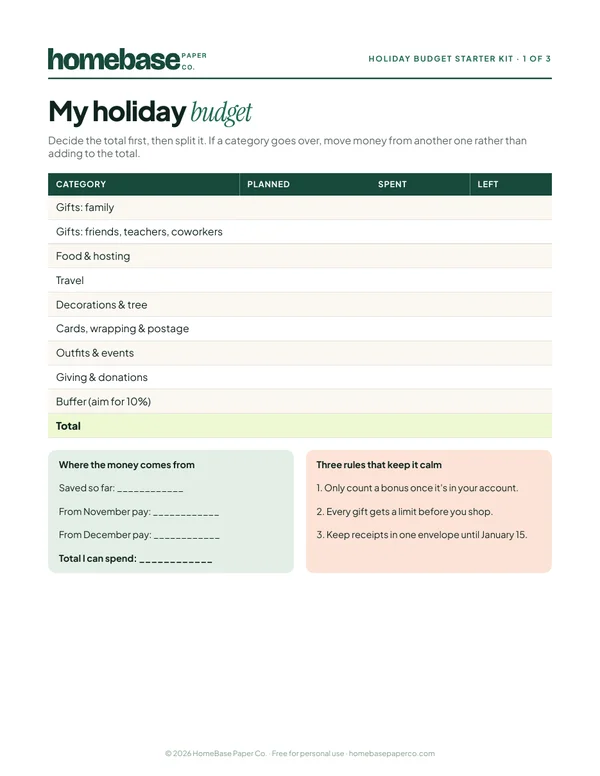
The Holiday Budget Starter Kit
A one-page holiday budget, a gift list with a spending limit for every person, and a 6-week countdown so December stays calm and paid for.
Free, no sign-up needed.
Save this guide for later