The 100 envelope challenge saves $5,050 by filling envelopes numbered 1 to 100 in any order, usually over about 100 days. The 52-week challenge saves $1,378 by depositing $1 in week one, $2 in week two and so on for a year. The first is faster and bigger; the second is gentler and spread out. A half envelope version sits in the middle at $2,525.
Here's how they compare, and how to choose.
The challenges side by side
| 100 Envelope | Half Envelope | 52-Week | |
|---|---|---|---|
| Total saved | $5,050 | $2,525 | $1,378 |
| How it works | Fill envelopes $1 to $100, any order | Fill envelopes $0.50 to $50, any order | Week number = dollars saved |
| Typical length | About 100 days (one envelope a day) | About 100 days | 52 weeks |
| Average per week | About $354 if done in 100 days | About $177 | About $26.50 |
| Biggest single deposit | $100 | $50 | $52 |
| Flexibility | High: pick envelopes to match your budget | High | Low: amount is set by the week |
| Best for | Higher income, a big goal, cash stuffers | Moderate budgets | Beginners, tight budgets |
The 100 envelope challenge sounds simple, but $5,050 in about three months is a large commitment. Plenty of people stretch it over six months or a year instead, which brings it down to about $97 a week over a year. That's still a lot, so be honest about your budget before starting.
How the 100 envelope challenge works
Number 100 envelopes from 1 to 100. Each day (or each payday) draw one at random or choose one, and put that many dollars in it. Small envelopes on tight weeks, big ones after payday. Because you choose, it bends around your cash flow, which is why it's popular with people who use cash envelopes.
Where people struggle: the last 20 envelopes are all big numbers if you've been picking the small ones first. Mixing in large envelopes early makes the end easier.
How the 52-week challenge works
Week one you save $1, week two $2, and so on to $52 in week 52. The early weeks are almost effortless, which builds the habit. The catch is timing: the largest deposits land in November and December, right when holiday spending peaks.
The fix: run it in reverse. Start at $52 in January, when motivation is high, and finish with $1 in December.
Which one should you pick?
- Pick the 52-week challenge if you're new to saving, money is tight, or you want something that runs in the background all year.
- Pick the half envelope challenge if you want a meaningful amount in a few months without $100 days.
- Pick the 100 envelope challenge if you have a specific goal near $5,000, such as an emergency fund, a car repair fund or a down payment top-up, and the room in your budget to save a few hundred dollars a week.
- Pick a custom tracker if you have a goal of your own, like $1,200 for Christmas, and want to divide it your way.
What the numbers look like for a real budget
Say your budget has $60 a week free after bills. The 52-week challenge fits every single week, since the largest deposit is $52, and leaves room to spare most of the year. The half envelope challenge would take about ten months at that pace, which is fine if you're not in a hurry. The full 100 envelope challenge would take about 84 weeks, or a little over a year and a half. None of these is wrong. The point is to pick a timeline your budget can actually carry, then stick to it. A challenge you finish slowly beats a fast one you abandon in week six.
Cash or bank account?
Physical envelopes are satisfying, but keeping thousands of dollars in cash at home isn't safe and earns no interest. A common compromise: fill the envelope, then deposit that amount into a high-yield savings account and keep the empty envelope as your record. Or skip envelopes entirely and track it on a chart or spreadsheet.
Our challenge kit
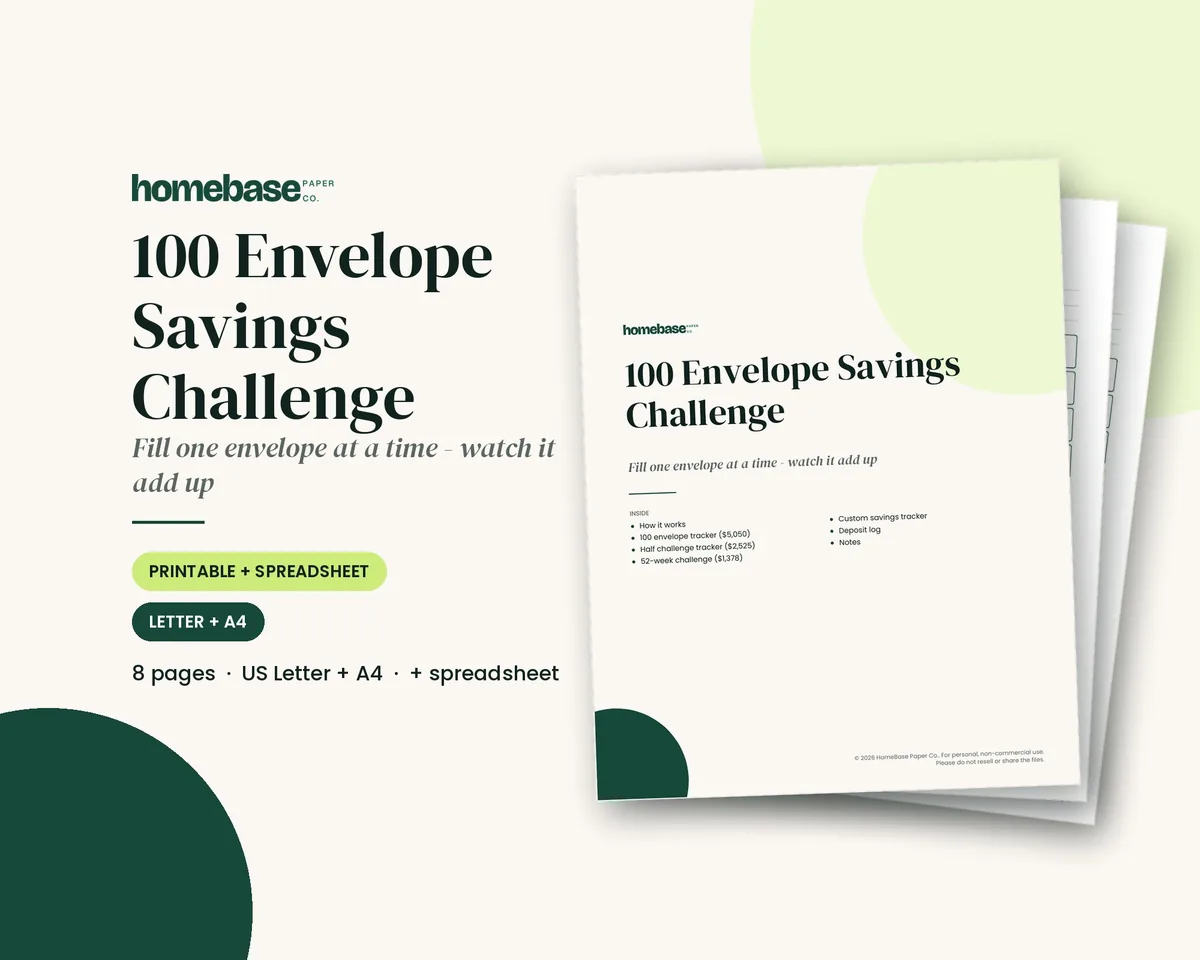
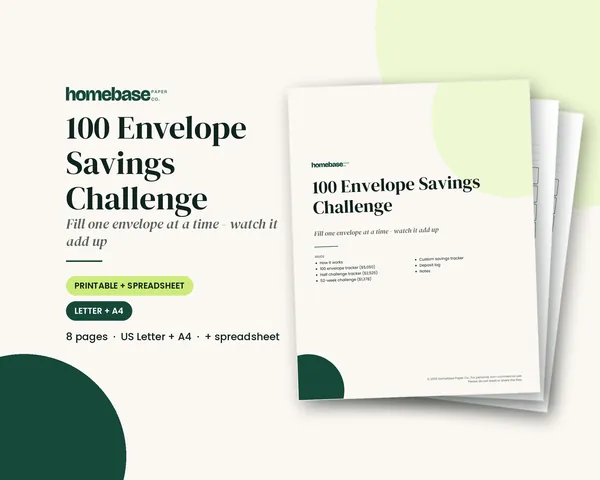
The 100 Envelope Savings Challenge ($3.99) includes all three printable challenges (100 envelope, half envelope and 52-week), a custom savings tracker, a deposit log, and a spreadsheet for Excel and Google Sheets that tracks every envelope and shows how much you've saved and what's left. It's an 8-page PDF in US Letter and A4.
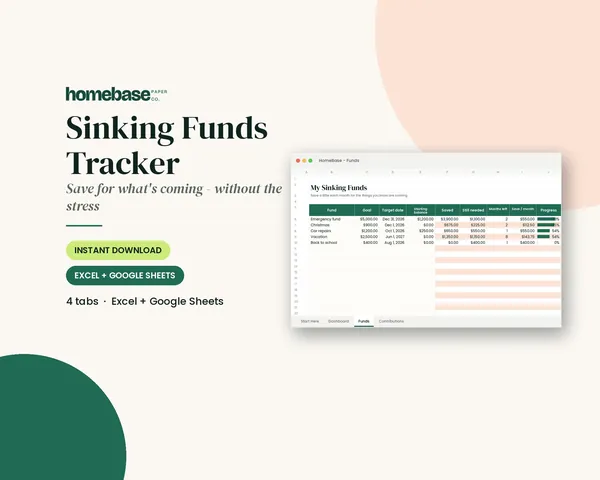
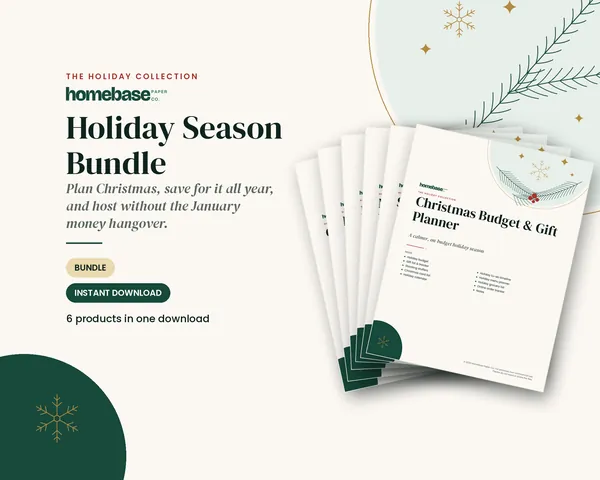
When the challenge is done and you're saving toward several goals at once, the Sinking Funds Tracker ($4.99) calculates how much to set aside each month to hit each goal on time. Both are included in the Holiday Season Bundle ($15.99). And for proud cash stuffers, there's the "Cash Envelope Club" design.
Tips for finishing any challenge
- Name the goal on the chart: "Emergency fund" works better than "savings."
- Automate what you can. A recurring transfer on payday does half the work.
- Don't quit after a missed week. Double up later or extend the timeline.
- Celebrate milestones at 25, 50 and 75 percent, cheaply.
Frequently asked questions
How much does the 100 envelope challenge save?
Filling envelopes numbered 1 to 100 saves a total of $5,050. The half envelope version, with envelopes from $0.50 to $50, saves $2,525. Many people take longer than 100 days to finish, which lowers the weekly amount and makes it easier to fit into a regular budget.
How much does the 52-week challenge save?
Saving $1 in week one, $2 in week two and so on up to $52 in week 52 adds up to $1,378 over a year. Running it in reverse, starting with $52 in January, avoids the biggest deposits landing during the expensive holiday season.
Which savings challenge is best for beginners?
The 52-week challenge is usually the easiest place to start because the early deposits are tiny and the habit builds slowly. The half envelope challenge is a good next step. The full 100 envelope challenge suits people with a specific goal and room to save a few hundred dollars a week.
Should I keep the savings in cash envelopes?
Keeping large amounts of cash at home carries a risk of loss or theft and earns no interest. Many people fill each envelope, then deposit the same amount into a savings account and keep the empty envelope or chart as a record of their progress.
Free download
The Holiday Budget Starter Kit
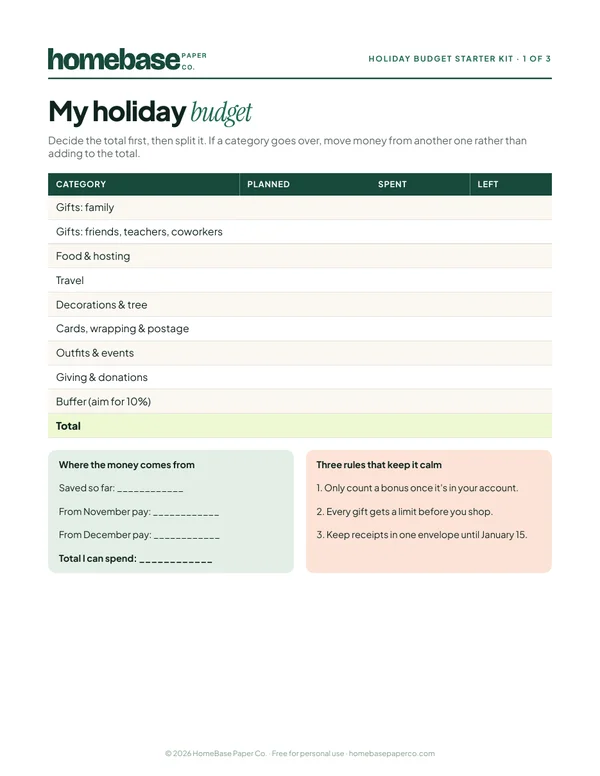
A one-page holiday budget, a gift list with a spending limit for every person, and a 6-week countdown so December stays calm and paid for.
Free, no sign-up needed.